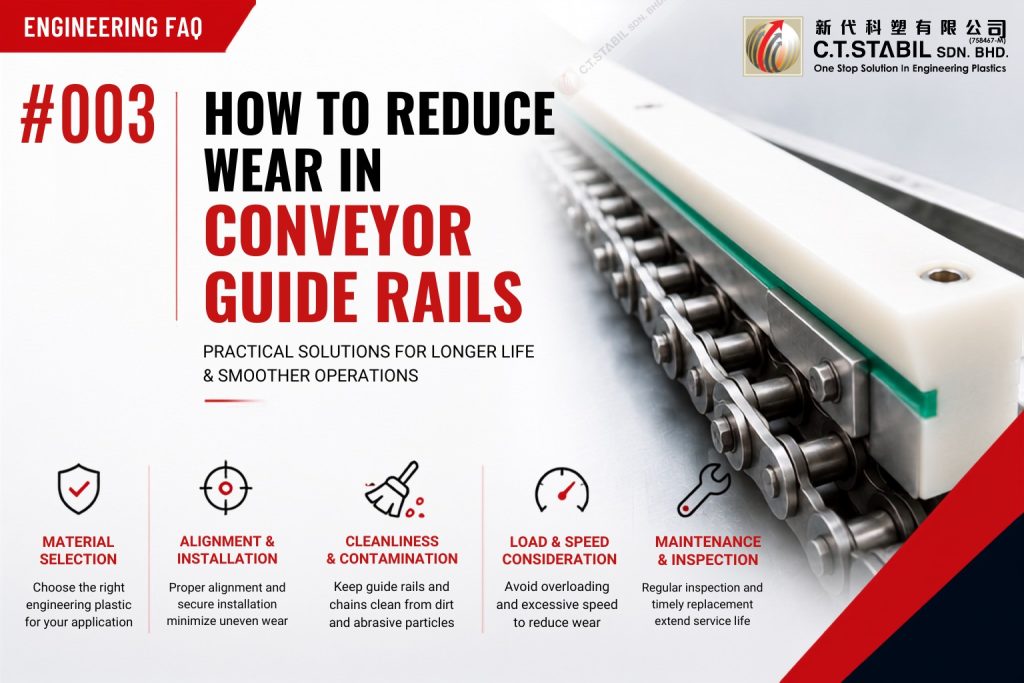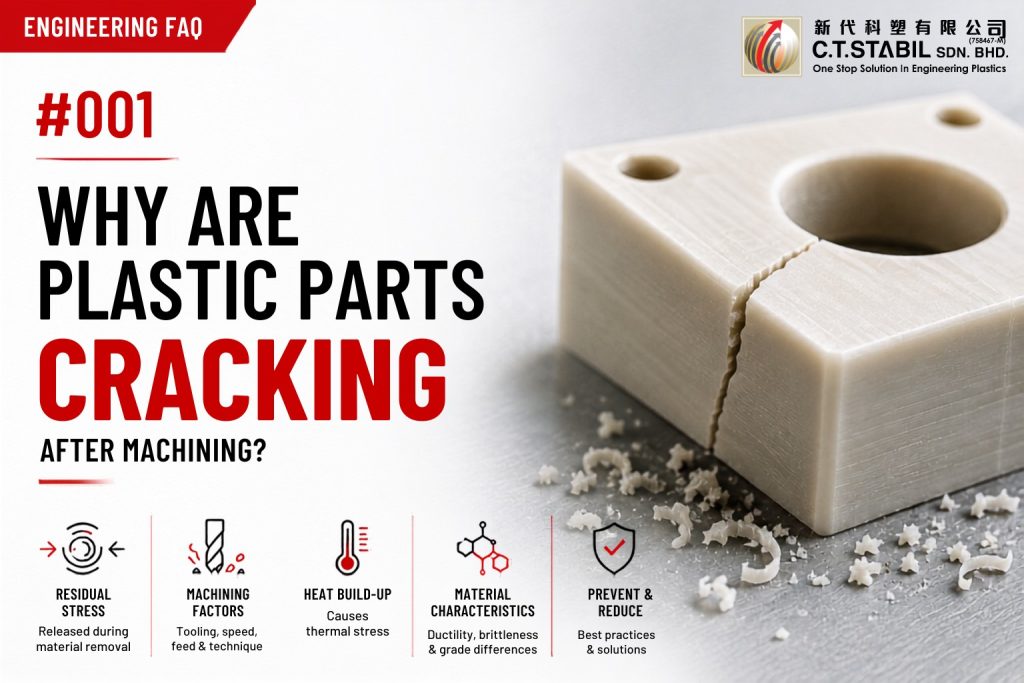
Engineering FAQ #003 – How to Reduce Wear in Conveyor Guide Rails

4 minutes reading.⭐ Quick AnswerIf your conveyor guide rails wear out quickly, the problem is rarely caused by the guide rail material alone.Premature wear is often the result of incorrect material selection, poor chain alignment, excessive load, insufficient support, contamination, or unsuitable operating conditions.By understanding

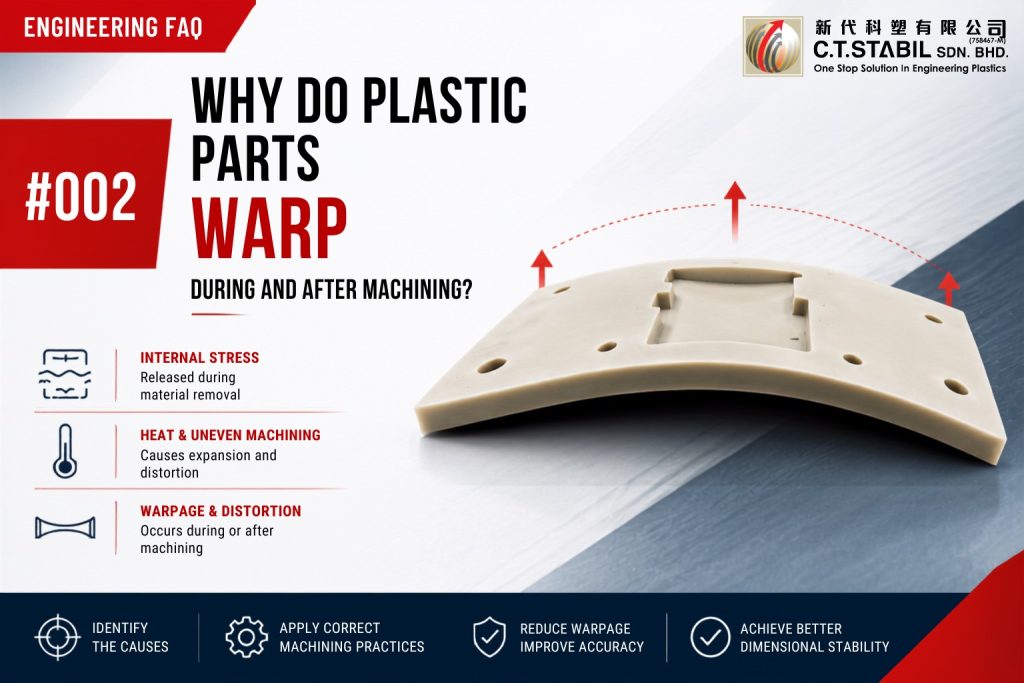
Engineering FAQ #002 – Why Do Plastic Parts Warp During and After Machining?

4 minutes reading⭐ Quick AnswerPlastic parts may warp during or after machining because internal stresses are released as material is removed. Uneven machining, excessive heat, poor workholding, moisture absorption, and part geometry can all contribute to dimensional movement.In most cases, the material itself is not defective.

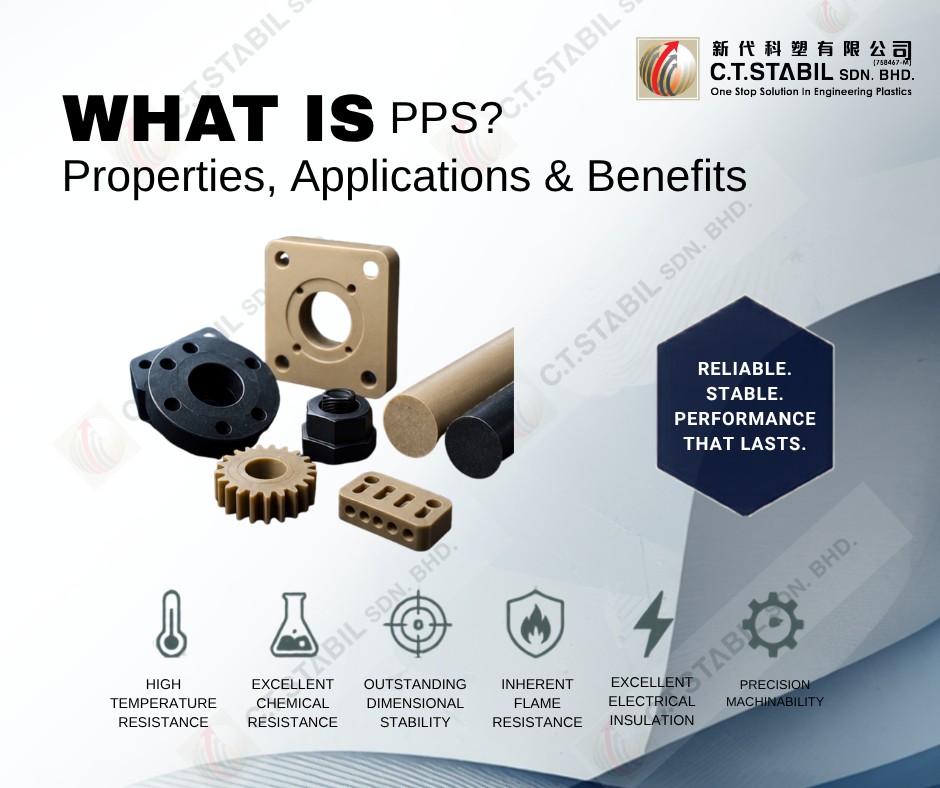
What Is PPS? Properties, Applications and Benefits

6 -7 minutes reading⭐ Material SnapshotMaterial Name: Polyphenylene Sulphide (PPS)Material Family: Semi-crystalline High-Performance Engineering ThermoplasticContinuous Operating Temperature: Approximately 220°CKey StrengthsExcellent chemical resistanceOutstanding dimensional stabilityVery low moisture absorptionInherent flame resistanceExcellent electrical insulationExcellent precision machinabilityCommon ApplicationsSemiconductor equipmentPump and valve componentsElectrical and electronic insulationChemical processing equipmentPrecision-machined industrial partsFood

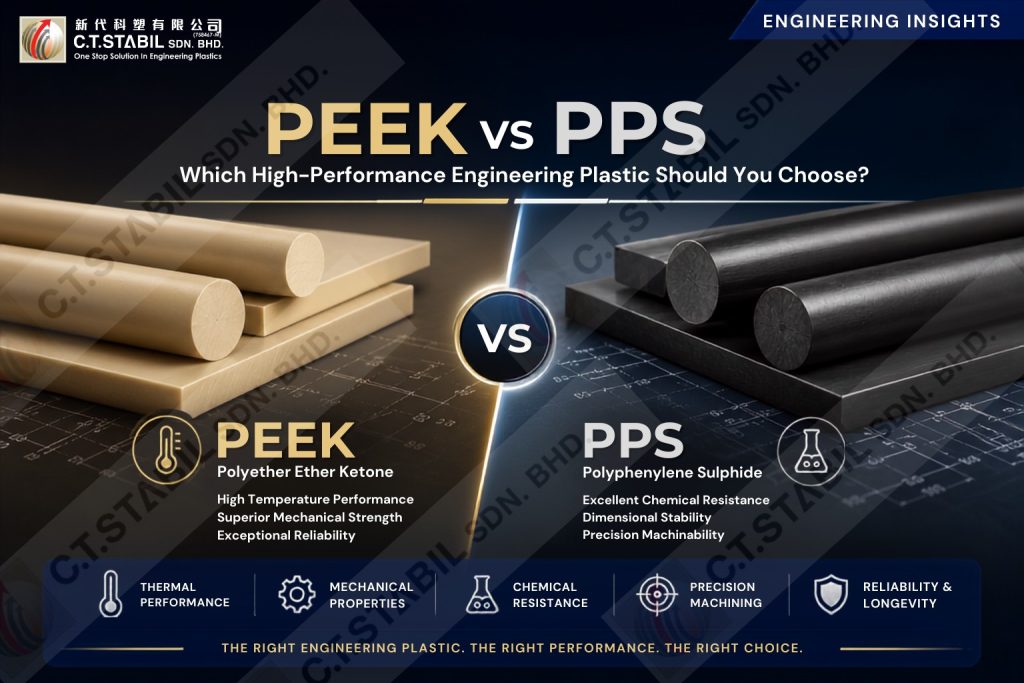
ENGINEERING INSIGHTS: PEEK vs PPS – Which High-Performance Engineering Plastic Should You Choose?

 ⚡ Engineering SnapshotPEEK generally offers higher continuous operating temperatures and greater mechanical strength.PPS excels in dimensional stability and chemical resistance for many industrial applications.Neither material is universally better—the correct choice depends on the operating environment.Engineers should evaluate total engineering value rather than relying solely on

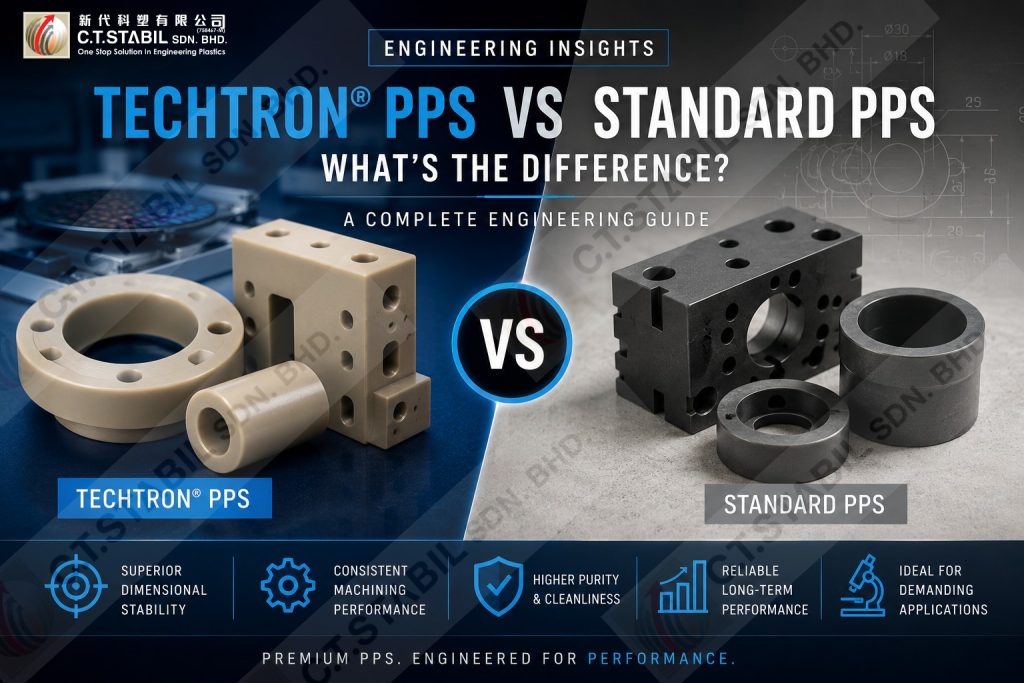
ENGINEERING INSIGHTS: Techtron® PPS vs Standard PPS – What’s the Difference?

 ⚡ Engineering Snapshot Techtron® PPS and standard PPS share the same polymer family, but manufacturing quality, process control, and material consistency can influence real-world engineering performance.Premium PPS grades such as Techtron® PPS are often selected for applications requiring high dimensional stability, consistent machining performance, and reliable

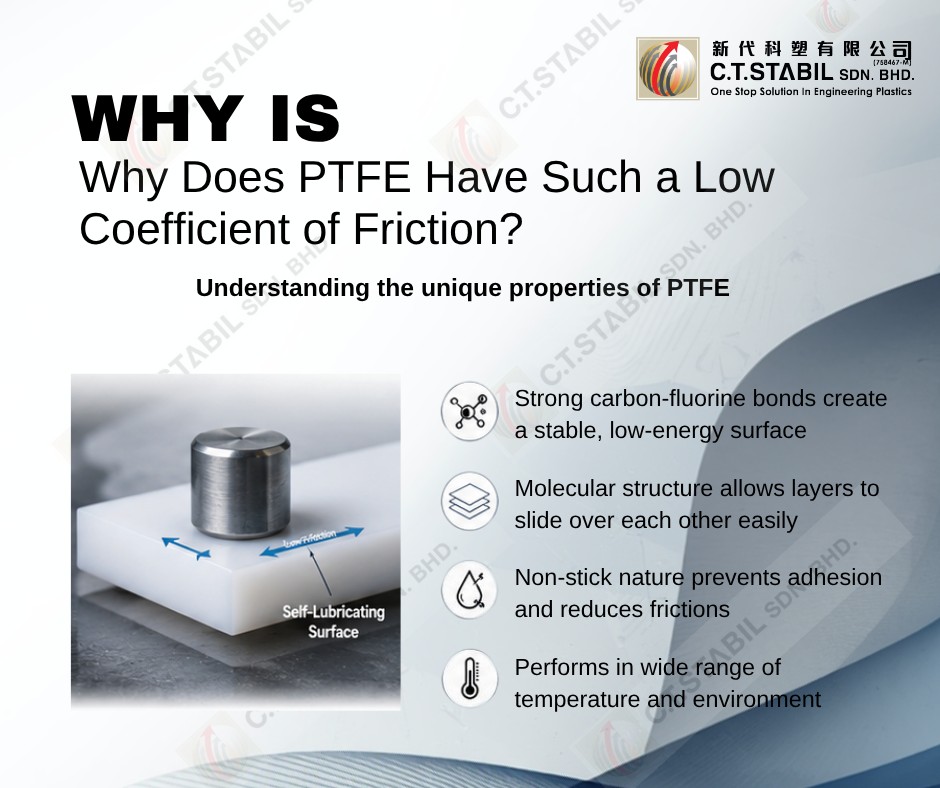
Why Does PTFE Have Such a Low Coefficient of Friction?

5 - 6 minutes reading.Polytetrafluoroethylene (PTFE) is widely recognised as one of the slipperiest engineering plastics available. Its exceptionally low coefficient of friction makes it an ideal material for applications where smooth movement, reduced wear, and minimal resistance are essential.From bearings and seals to sliding

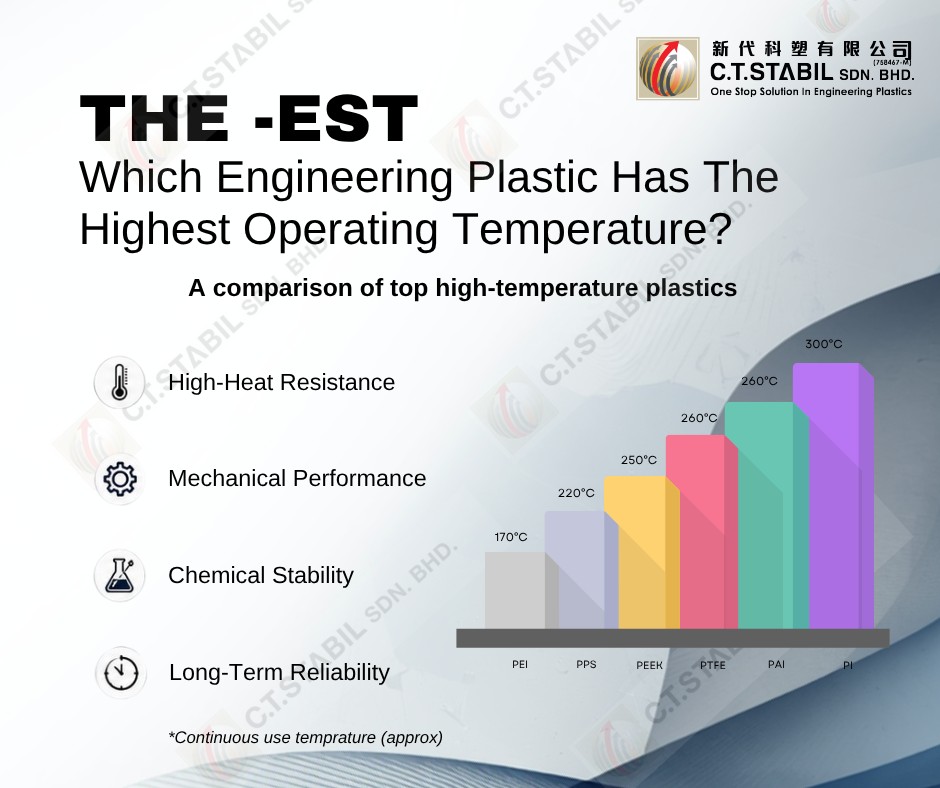
Which Engineering Plastic Has the Highest Operating Temperature?

  5 - 6 minutes reading When selecting an engineering plastic for high-temperature applications, one of the first questions engineers ask is: Which engineering plastic can withstand the highest operating temperature? The answer is not always straightforward.While several high-performance engineering plastics can operate in extreme temperatures, each material offers

How to Choose Between POM-C and POM-H?

6 - 7 minutes reading.When selecting Polyoxymethylene (POM), also known as Acetal, one of the most common questions engineers ask is:Should I choose POM-C or POM-H?Although both materials belong to the same engineering plastic family, they are manufactured using different processes, resulting in subtle differences

Why Is UHMW-PE So Wear Resistant?

5 - 6 minutes reading.Ultra-High Molecular Weight Polyethylene, commonly known as UHMW-PE, is one of the most wear-resistant engineering plastics available today. It is widely used in industries such as mining, bulk material handling, food processing, packaging, and conveyor systems, where components are constantly exposed