


Engineering FAQ #001 – Why Are Plastic Parts Cracking After Machining?
4 mins reading
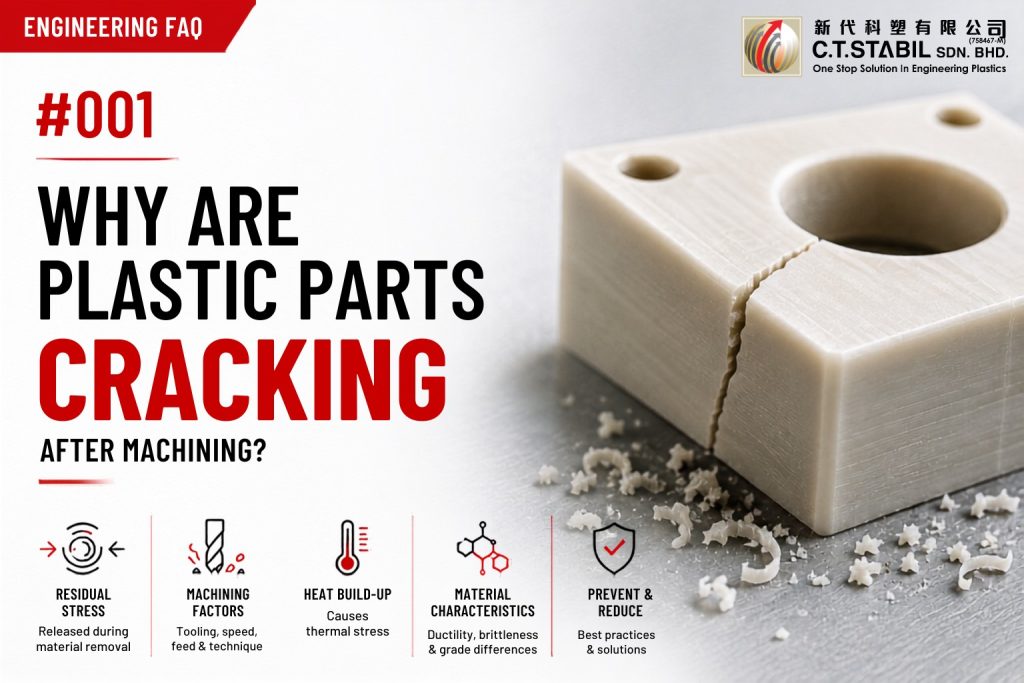
One of the most common questions engineers and machine shops ask is why a perfectly machined plastic component develops cracks shortly after production—or even after it has been installed.
In many cases, the material itself is not defective. Cracking is often the result of internal stresses, machining practices, component design, or operating conditions. Understanding the root cause is the first step towards preventing the problem from recurring.
⭐ Quick Answer
Plastic parts can crack after machining for several reasons, including:
- Residual internal stress within the material.
- Excessive heat generated during machining.
- Incorrect cutting tools, feeds, or speeds.
- Poor workholding or excessive clamping force.
- Sharp internal corners that concentrate stress.
- Selecting a material that is not suitable for the application.
Fortunately, most machining-related cracks can be prevented through proper material selection, machining techniques, and good component design.
What Causes Plastic Parts to Crack?
1. Residual Internal Stress
Some engineering plastics contain residual stress from the manufacturing process. During machining, removing material can release these stresses, causing the component to crack immediately or several days later.
For critical applications, stress-relieving (annealing) before or after machining may help reduce this risk, depending on the material.
2. Excessive Heat During Machining
Unlike metals, plastics have relatively low thermal conductivity.
If cutting tools become dull or machining parameters are too aggressive, heat can build up quickly. This localised heating may soften the material, introduce additional stress, or create micro-cracks that later develop into visible fractures.
Using sharp tools, appropriate cutting parameters, and avoiding unnecessary heat build-up can significantly improve machining results.
3. Incorrect Workholding
Clamping a plastic workpiece too tightly may introduce mechanical stress before machining even begins.
Once material is removed, the stored stress may be released, resulting in distortion or cracking.
Workholding should secure the component firmly without excessive compression.
4. Poor Component Design
Sharp internal corners act as stress concentrators.
Under mechanical loading, these locations experience much higher local stress than the surrounding material, making crack initiation more likely.
Where possible, incorporating generous internal radii helps distribute stress more evenly and improves component durability.
5. Incorrect Material Selection
Not every engineering plastic performs equally well in every application.
A material that machines well may still be unsuitable if it is exposed to excessive impact, aggressive chemicals, high temperatures, or continuous mechanical loading after installation.
Selecting the right engineering plastic should always consider the complete operating environment—not just ease of machining.
How to Prevent Plastic Parts from Cracking
Most machining-related cracking can be avoided by following a few good engineering practices:
- Use sharp cutting tools designed for plastics.
- Optimise feeds and cutting speeds to minimise heat generation.
- Avoid excessive clamping pressure during machining.
- Include radii instead of sharp internal corners where possible.
- Consider stress-relieving procedures for critical applications.
- Verify that the selected material matches the operating conditions.
💡 Workshop Tip
Many plastic components do not crack immediately after machining. Instead, cracks may appear hours or even days later as residual stresses gradually relax.
When investigating failures, review the complete manufacturing process—not just the material itself. In many cases, machining conditions or component design are contributing factors.
Conclusion
Plastic parts rarely crack without an underlying cause.
By understanding how machining practices, residual stress, component design, and material selection interact, engineers can significantly reduce the risk of cracking and improve long-term component reliability.
When persistent cracking occurs, it is often beneficial to review both the machining process and the suitability of the selected engineering plastic before assuming the material is defective.