


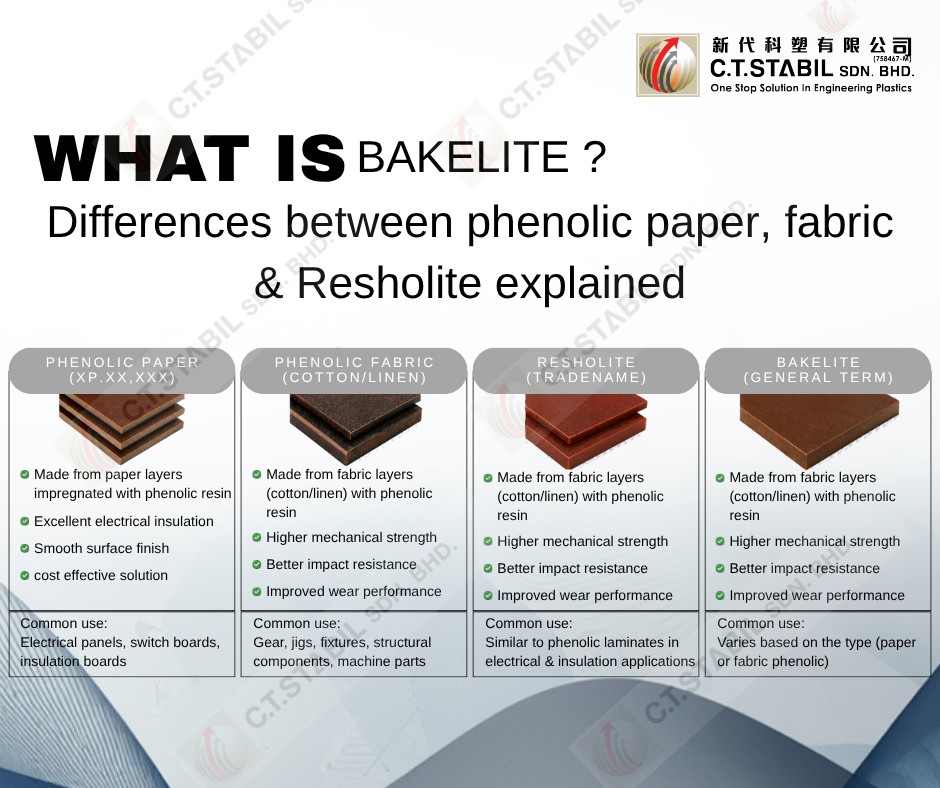
What is Bakelite? Differences Between Phenolic Paper, Fabric & Resholite Explained
Bakelite is a commonly used term in the market, but technically it refers to an early brand of phenolic resin—one of the first synthetic plastics. Today, what most people call “Bakelite” is actually phenolic laminate, an engineering material made by combining resin with reinforcing layers such as paper or fabric.
Understanding Phenolic Materials
Phenolic laminates are produced by compressing layers of material (paper, cotton fabric, or glass) with phenolic resin under heat and pressure. This creates a rigid, strong, and electrically insulating material widely used in industrial applications.
Types of Phenolic (Often Called Bakelite)
1. Phenolic Paper (XP, XX, XXX) or Bakelite orange, Bakelite black and Bakelite brown
Made from paper layers, this type offers:
- Excellent electrical insulation
- Smooth surface finish
- Cost-effective solution
Common use: electrical panels, insulation boards
2. Phenolic Fabric (Cotton / Linen)
Reinforced with fabric, providing:
- Higher mechanical strength
- Better impact resistance
- Improved wear performance
Common use: gears, jigs, structural components
3. What is “Resholite”?
“Resholite” is a market or brand name often used to describe phenolic sheets. It is not a different material but generally refers to phenolic laminates, similar to what many customers call Bakelite.
Key Differences at a Glance
- Paper Phenolic: Best for electrical insulation, lower strength
- Fabric Phenolic: Best for mechanical applications, higher durability
- Resholite / Bakelite: General or trade terms, not specific grades
Why This Matters
Many customers mistakenly request “Bakelite” without specifying the grade. However, choosing the wrong type can lead to performance issues, especially in load-bearing or high-wear applications.
Conclusion
“Bakelite” is a general term, usually known as Bakelite brown, Bakelite orange, Bakelite black or Bakelite cotton while phenolic materials come in different grades designed for specific purposes. Understanding the differences between paper and fabric phenolic helps ensure the right material is selected for your application.
If you’re unsure which grade suits your needs, getting the specification right from the start can save both cost and downtime.